Spring Concrete Season Is Here: Why Border-Region Homeowners Book Early
As temperatures climb in Monroe and Lucas counties, concrete crews shift from winter punch lists to full pour schedules. Here is what drives cost, timing, and quality in the busiest season of the year.
By T1 Construction
The first 60-degree weekend changes every calendar in southeast Michigan
There is a predictable moment each March when phones ring at concrete companies from Dundee to Oregon: the first stretch of weather warm enough to imagine sitting on a patio again. Homeowners who requested quotes in January are ready to commit. Those who waited are surprised to hear April start dates already taken. Spring concrete season on the Michigan–Ohio border is short enough to feel urgent and long enough to reward preparation — if you know how the trade actually works.
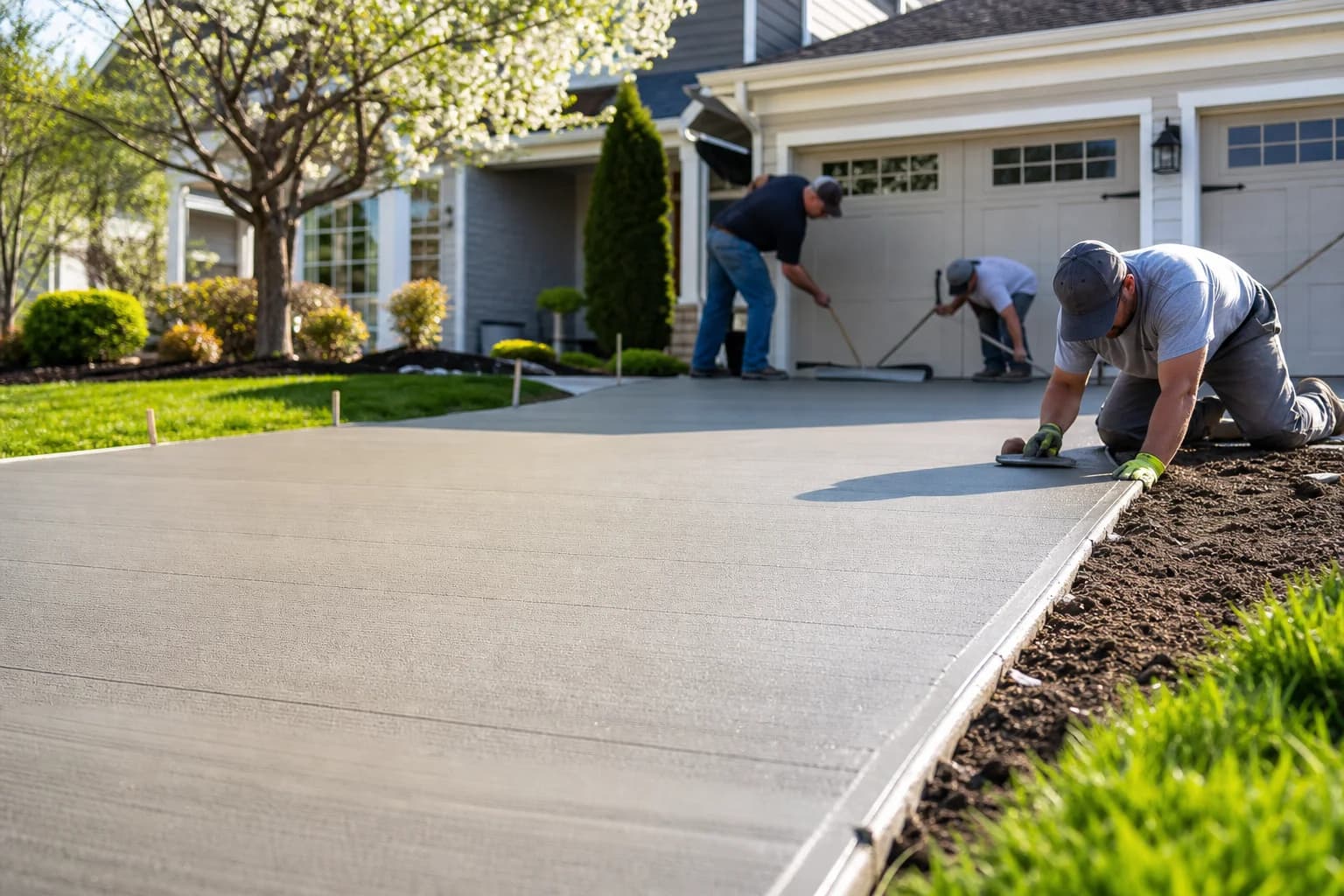
Concrete is not a product you order off a shelf. It is a perishable material whose quality depends on temperature, humidity, subgrade conditions, and the crew's ability to finish before it sets. In March and April, crews watch overnight lows, ground temperature, and rain forecasts with the focus of farmers watching frost reports. The best pours happen when preparation — excavation, base compaction, form work — is complete before the truck arrives, not while the driver waits.
For driveways, patios, walkways, and garage aprons across Monroe, Washtenaw, Lucas, and Wood counties, spring remains the most requested season. Understanding why calendars fill, what affects price, and what separates a slab that lasts from one that spalls after the first salt season helps homeowners make decisions they will not regret next February.
Why early booking is not about contractor scarcity tactics
Reputable crews limit how many pours they schedule per week because quality drops when teams rush. A typical residential driveway requires coordinated tear-out (if needed), base installation, form setting, pour, finish, joint cutting, and cure management — often across multiple days with weather dependencies between them.
Permitting adds lead time in many townships. A detached garage slab in Perrysburg or a front walk in Saline may need inspection before pour. Contractors who handle permits as part of the quote absorb that timeline into the schedule; those who do not may leave homeowners holding a signed contract and no legal approval to start.
Material and equipment availability also peaks with demand. By mid-April, favored finish dates for decorative work — stamped patios, exposed aggregate walks — are often six to eight weeks out in busy markets. Booking in March secures a slot; it does not necessarily mean work starts tomorrow.
“We treat what is under the slab as seriously as the slab itself. That is where shortcuts show up years later.”
What a proper pour includes — and what cheap quotes omit
Every legitimate concrete quote in this region should address excavation depth, compacted aggregate base thickness, reinforcement (rebar or mesh), concrete thickness, air entrainment for freeze-thaw, control joint layout, finish type, drainage pitch, and cure time recommendations. Tear-out and haul-away of existing material should appear as a line item when applicable.
The $6–$15 per square foot range most homeowners see reflects real variables: a straight double-wide driveway with good access costs less per foot than a narrow backyard walk with gate constraints and hand-mix sections. Decorative finishes, integral color, and stamped patterns add labor and material. A quote at the bottom of the range that omits base depth or joint cutting is not a bargain — it is incomplete.
Drainage is non-negotiable in a climate where meltwater refreezes at night. Every pour should slope away from garage thresholds, foundation walls, and basement window wells. Standing water on a patio is both a nuisance and a long-term freeze-thaw hazard.
- Excavation to stable subgrade and removal of unsuitable soil
- Compacted aggregate base — depth sized to expected load
- Reinforcement and correct slab thickness for vehicles or foot traffic
- Air-entrained mix designed for freeze-thaw exposure
- Control joints saw-cut at appropriate spacing and depth
- Proper pitch for drainage away from structures
Driveways, patios, and slabs — different loads, different engineering
Driveways and garage aprons carry vehicle point loads. They need thicker sections, stronger reinforcement, and joints placed to manage both shrinkage and thermal movement. Patios and walkways handle lighter loads but still require base prep in clay soil — skipping it causes settling that telegraphs through pavers or concrete alike.
Garage and shed slabs for new outbuildings must align with the structure that sits on them. Homeowners planning a detached garage in Tecumseh or a pole barn in Bowling Green often sequence slab first, structure second — one crew handling both avoids the finger-pointing that happens when a concrete sub and a framing sub disagree about anchor placement.
Decorative concrete — stamped patios in Ann Arbor backyards, colored walkways in Temperance — demands the same structural standards beneath the pattern. The stamp is the last step, not the foundation of durability.
Timing your project around weather — and your summer plans
March pours require more caution; April through early June and September through October offer the most forgiving cure windows. If you need a driveway before hosting Memorial Day, March is the time to commit, not May. If you want a patio ready for July Fourth, forms should be set before June.
Cure restrictions mean planning daily life, too. You will need alternative parking while a driveway cures. Pets and kids stay off fresh walks for at least a day. Contractors should provide written guidance on when foot traffic, passenger vehicles, and heavy loads are safe — timelines shift with temperature and mix design.
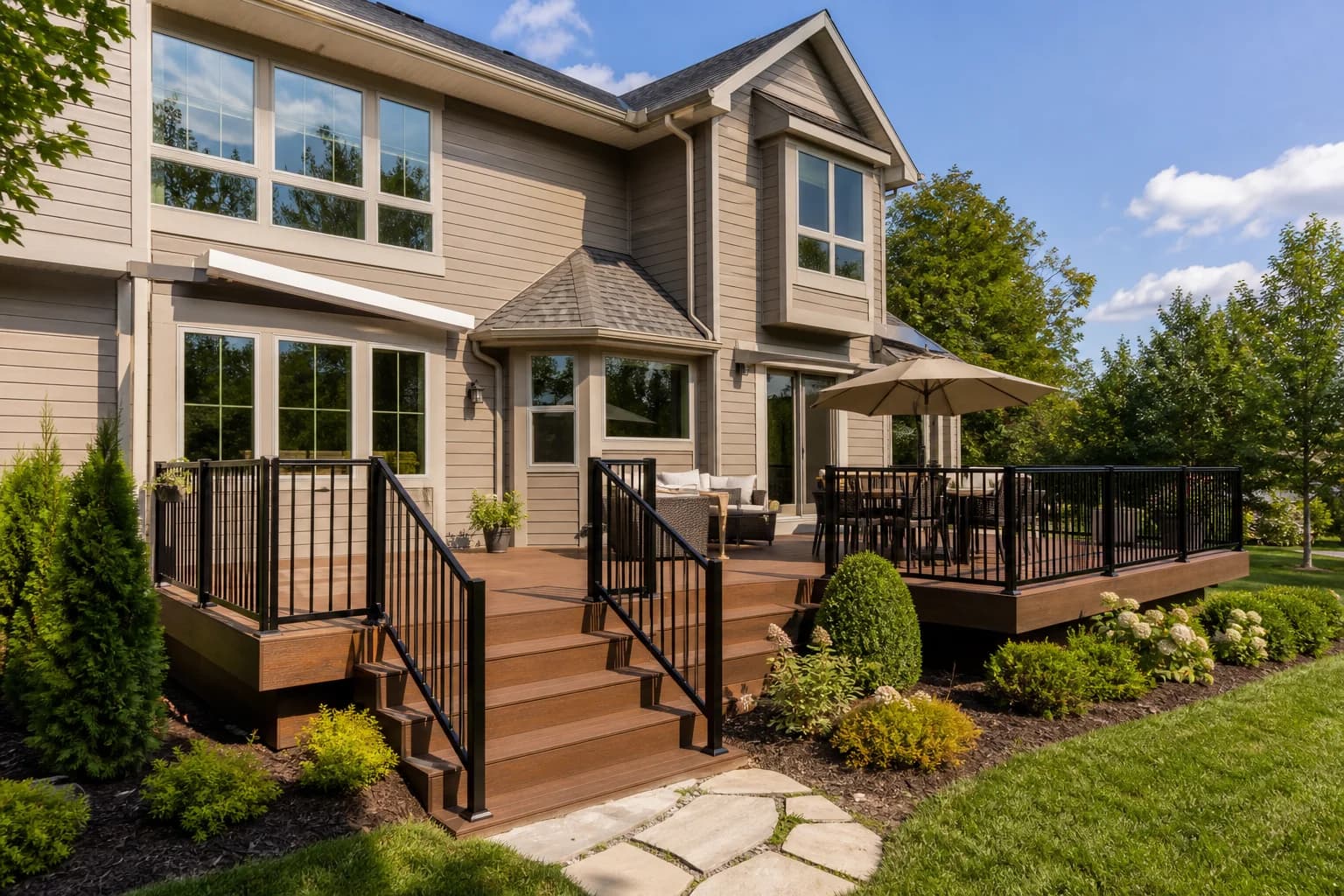
Homeowners who align concrete work with adjacent projects — a patio now, deck footings later, or apron plus garage build — reduce duplicate mobilization costs and get a cohesive outdoor plan. Border-region contractors who self-perform multiple trades can often coordinate that sequence more efficiently than juggling separate companies.
Frequently asked questions
Lock your spring slot with a written quote
Spring calendars for driveways, patios, and slabs fill quickly across Monroe, Toledo, and the surrounding border counties. T1 Construction provides free on-site consultations and itemized written estimates — so you know exactly what is included before the first truck arrives.